Relationships & Connection

Expressing Anger
Everyone gets angry. The important thing is that we learn how to deal with it in a healthy way so that it doesn’t hurt us or other people.




Ways to Express Your Anger

WHAT ARE SOME WAYS YOU CAN EXPRESS YOUR ANGER IN A HEALTHY WAY?
Experiencing trauma can disrupt how people live their lives. It can be difficult to tell the difference between taking reasonable precautions and behaving in ways that are unhelpful. You could discuss the things that you are doing to keep yourself safe with a trusted friend or family member, or your doctor, to reflect on whether you’re behaving in your best interests.
Everybody needs a weekly routine, social connections, and things in their life that make them happy and feel meaningful. If you don’t feel you have these things, or if the effects of trauma are disrupting your enjoyment of your life, it may be helpful to start taking steps towards improving your quality of life. This will help you feel in control and reduce the sense that your life is ’on hold.’
Start taking steps towards improving your quality of life.

Reducing Avoidance of People, Places, or Situations
Activity 1:
Think about what you’ve been avoiding, and whether avoidance is making your life more difficult. If you can confront the things that make you feel anxious, it will help you put the trauma(s) behind you. It will also help increase your confidence that you can overcome difficulties, and help you feel safer.


Reducing Avoidance of People, Places, or Situations
Activity 2:
While avoiding trauma memories makes sense, it can also stop you recovering and healing. This is because the harder you try to avoid and push away memories, thoughts or feelings, the more you will experience them. This is no one’s fault – it’s just the way the human mind works.
There are 5 steps to this activity:
The first and second steps are connected.
First: On the left list things that you often avoid as a result of the trauma(s) you’ve experienced. For example, “driving at night.”
Second: On the right, rate the level of distress these events cause you. Assign each situation a distress level out of 10. If a situation causes you no distress, rate it 0. If it causes you extreme distress, rate it 10.


Third: Try to put the situations in order, from least to most distressful. An example is someone experiencing PTSD after a car accident.
Fourth: Confront the easiest item on your list – the one that is least distressing.
Fifth: Move on to the next situation on your list.
The path to healing takes time.
Identifying Emotions and Reconnecting
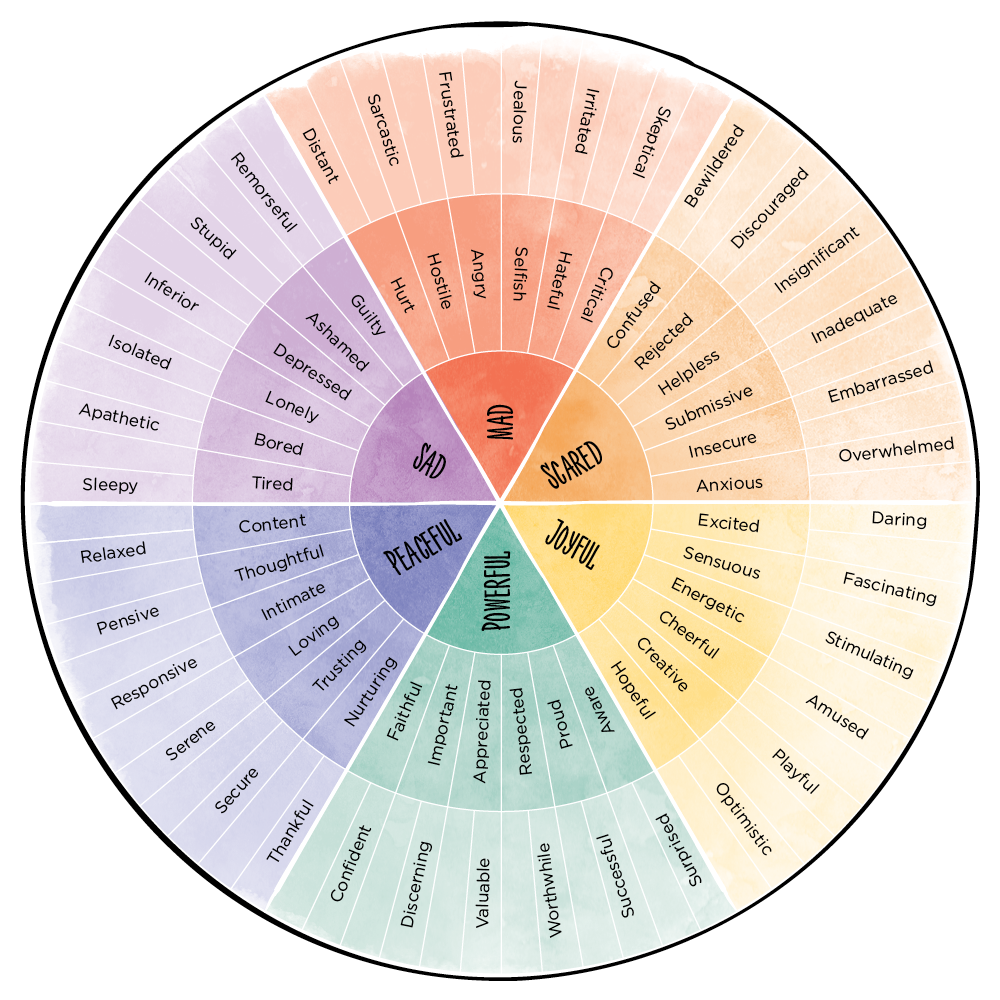
How are you feeling today? Locate it on The Feeling Wheel developed by Dr. Gloria Wilcox.
Then type the word (Happy, Sad, etc.) and the colour associated with it (Yellow, Blue, etc.) in the box below the Feeling Wheel.
Healing Wolf Take a Break
Take some time to clear your mind and colour the image below. Simply click a colour swatch and then click on the area you want to colour. You can print your finished artwork or choose to reset at any time if you’d like to start over.
Building Emotional Connections
Another symptom of trauma is feeling emotionally numb. Sometimes it is difficult to connect with other people, particularly if you have been through something traumatic. You may feel that others don’t understand you or that they are judging you. Perhaps you feel ashamed or guilty, unworthy of making friends and having a relationship. This is another area where setting some specific goals can really help you live a healthier life.
Instructions: Describe your specific interactions with other people, including your goal for the interactions, any strategies you used, and reflections on how satisfied you were with how the encounter went. Do this once a day for at least two weeks.
Describe the Situation (Who was involved, what was said, how you reacted)
What Was Your Goal?
What Strategies Did You Use?
Were you satisfied with the outcome? If not, what other strategies could you have used?
Wellness Wheel
Using the Feeling Wheel, starting from the centre of the wheel and working out, type the colour and emotion in each circle based on where you think you are with the subject. Do you feel super-healthy, happy when you think about your body? Type the brightest colour in the section you feel most beautiful.


Spiritual
Physical
Emotional
Mental